


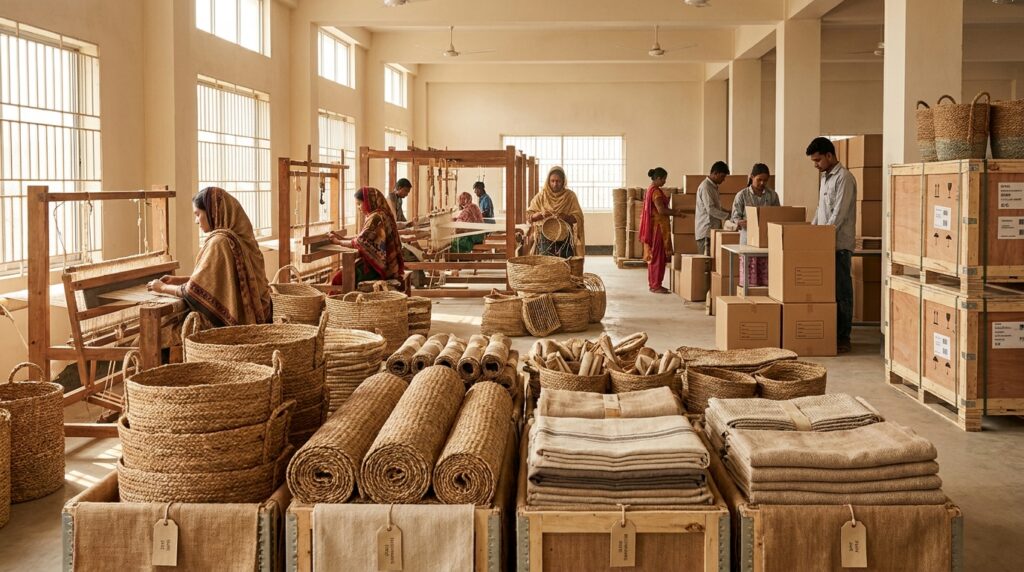
Handmade jute products have become increasingly popular across global home décor and lifestyle markets. From woven baskets and storage solutions to rugs, bags, and decorative accessories, jute products are valued for their natural texture, durability, and sustainable appeal.
Behind every handcrafted jute product is a detailed process that combines natural materials, skilled craftsmanship, and traditional weaving techniques. Unlike mass-produced alternatives, handmade jute products carry the character of artisan work and reflect a more thoughtful approach to manufacturing.
This article explores how handmade jute products are created — from raw material preparation to the final finished product.
What Is Jute?
Jute is a natural plant-based fiber primarily grown in South Asia, especially in Bangladesh and India. Often called the “golden fiber,” jute is known for its strength, biodegradability, and eco-friendly characteristics.
Because it is renewable, recyclable, and naturally decomposable, jute has become one of the most widely used materials in sustainable product manufacturing.
Its versatility makes it suitable for a wide range of handcrafted products including:
- Storage baskets
- Laundry baskets
- Rugs & floor mats
- Decorative accessories
- Bags & totes
- Table décor products
- Home organization solutions
Step 1 — Harvesting & Fiber Extraction
The process begins with cultivating jute plants in fertile agricultural regions. Once the plants mature, they are harvested and processed to extract the fibers.
After harvesting, the stalks are soaked in water through a traditional process called retting. This helps loosen the fibers from the plant structure. The fibers are then carefully separated, washed, dried, and bundled for further processing.
This stage is essential for ensuring fiber strength, flexibility, and texture quality.
Step 2 — Fiber Preparation & Yarn Making
Once dried, the raw jute fibers are cleaned and sorted according to quality, thickness, and texture.
The fibers are then spun into yarn or rope depending on the intended product type. Different weaving styles and product categories may require different yarn thicknesses or braid structures.
For some products, jute is blended with other natural or recycled materials to create softer textures, decorative patterns, or enhanced flexibility.
Step 3 — Product Design & Development
Before production begins, artisans and product developers determine:
- Product dimensions
- Shape and structure
- Weaving pattern
- Color combinations
- Functional requirements
- Handle or accessory details
Samples are often created to test the final appearance, structure, and usability before full production begins.
This development process is especially important for export buyers and private-label collections requiring custom specifications.
Step 4 — Hand Weaving & Craftsmanship
This is the heart of handcrafted jute production.
Skilled artisans manually weave, coil, braid, or stitch the prepared jute material into finished products using traditional techniques passed down through generations.
Depending on the product type, artisans may use:
- Hand coiling techniques
- Braided weaving methods
- Stitching and binding
- Structural reinforcement
- Decorative finishing techniques
Because the process is handmade, every product carries unique texture variations and authentic craftsmanship details that machines cannot fully replicate.
This stage requires patience, precision, and years of artisan experience.
Step 5 — Finishing & Quality Inspection
After weaving is completed, products move through several finishing stages.
These may include:
- Shape correction
- Edge finishing
- Handle attachment
- Surface cleaning
- Trimming excess fibers
- Final stitching inspection
Each product is then checked for:
- Structural consistency
- Weaving quality
- Dimension accuracy
- Durability
- Surface finishing
Strict quality control helps ensure products meet international export standards and buyer expectations.
Step 6 — Packaging & Export Preparation
Once approved, products are carefully packed using export-ready packaging methods designed to protect shape and quality during international shipping.
Manufacturers often prepare products according to:
- Retail packaging requirements
- Wholesale carton specifications
- Private-label branding needs
- International shipping standards
Proper packaging plays a major role in maintaining product condition throughout global transportation.
Why Handmade Jute Products Are Different
Handcrafted jute products offer several advantages over synthetic or mass-produced alternatives.
Natural & Biodegradable
Jute is fully biodegradable and environmentally friendly, making it a preferred material for sustainable product collections.
Durable & Functional
Despite its natural appearance, jute is highly durable and suitable for everyday household use.
Artisan-Made Character
Each handcrafted piece carries slight natural variations that create authenticity and individuality.
Lower Environmental Impact
Handmade production typically involves lower machine dependency and less industrial waste compared to large-scale manufacturing systems.
Timeless Aesthetic
Jute products complement modern, minimalist, rustic, Scandinavian, and eco-conscious interior styles.
Supporting Artisan Communities
Handcrafted jute production also creates valuable employment opportunities for artisan communities, especially in rural areas of Bangladesh.
Many weaving techniques are preserved through generations of skilled craftsmanship, helping maintain cultural traditions while supporting sustainable economic growth.
For many artisans, handcrafted production provides long-term income opportunities and community stability.
The Future of Handmade Jute Products
As global demand for sustainable home décor continues to grow, handmade jute products are becoming increasingly important in modern retail and interior design markets.
Consumers and buyers are actively seeking products that combine:
- Sustainability
- Craftsmanship
- Functionality
- Ethical production
- Natural aesthetics
This shift is helping handcrafted jute products evolve from traditional utility items into premium lifestyle and décor collections.
Conclusion
Handmade jute products represent more than just home décor or storage solutions. They reflect sustainable materials, skilled craftsmanship, cultural heritage, and responsible production practices.
From raw fiber preparation to detailed hand weaving and finishing, every stage of the process contributes to products designed with durability, authenticity, and purpose.
As sustainable living continues shaping global markets, handcrafted jute products will remain an important part of eco-conscious homes and modern interior design worldwide.